The right clinician depends on your symptom pattern, how quickly it developed, and whether the problem is mechanical, inflammatory, nerve-related, or caused by weakness. By the end, you will know which warning signs need urgent care, how to compare specialists, what to bring to the first visit, and how to judge a proposed treatment plan.
Key takeaways
- Seek urgent assessment after major injury, joint deformity, or inability to move safely.
- Match your symptoms to the right orthopaedic subspecialist.
- Compare doctors by relevant experience, examination quality, and treatment options.
- Ask what each test will change before agreeing to imaging or surgery.
When joint pain needs urgent orthopaedic assessment
Immediate assessment is needed when joint pain follows significant injury, changes the joint’s shape, or prevents safe movement. Do not wait for a routine appointment if you have:
- A suspected fracture, severe pain after a fall or blow, inability to bear weight, or a limb that looks shortened or misaligned.
- A dislocated joint, visible deformity, or a joint that suddenly becomes locked.
- A hot, very swollen joint with fever, chills, or feeling acutely unwell. This joint pain emergency could be septic arthritis, which can rapidly damage cartilage and threaten your health.
- New numbness, weakness, pale or blue skin, coldness, or absent pulses below the injured joint.
- Sudden calf swelling and pain, particularly with breathlessness or chest pain; seek emergency medical care because a blood clot may have travelled to the lungs.
- Back pain with new leg weakness or loss of bladder or bowel control; go to emergency care immediately.
The appropriate urgency depends on the symptom pattern:
| Symptom pattern | Best next step | Why it matters |
|---|---|---|
| Severe injury, deformity, suspected fracture or dislocated joint | Emergency department or urgent orthopaedic doctor | The joint may need reduction, imaging, splinting, or surgery |
| Hot swollen joint with fever | Emergency assessment | Infection can destroy the joint quickly |
| Swelling and stiffness in several joints or the small hand and foot joints | Prompt rheumatology assessment | Inflammatory arthritis needs early treatment, even if blood tests are normal |
| Pain without red flags | Routine appointment | Examination can guide treatment without unnecessary emergency testing |
Which specialist fits your symptom pattern?
The symptom pattern matters more than the joint’s name. An orthopaedic doctor for joint pain is usually the right first contact for mechanical pain after injury, osteoarthritis, a suspected fracture, or a tendon or ligament problem. Use this guide:
| Specialist | Best first contact when | What may go wrong if you choose poorly |
|---|---|---|
| Orthopaedic doctor | Pain follows injury, worsens with use, or causes restricted movement, deformity, or suspected structural damage | A scan may be reviewed without a functional examination or non-operative plan |
| Rheumatologist | Several joints are swollen, warm, or tender; small hand or foot joints are involved; morning stiffness lasts more than 30 minutes | Inflammatory arthritis may progress while you wait for blood-test results; normal rheumatoid factor, anti-CCP, or inflammatory markers do not exclude early disease |
| Neurologist | Burning pain, numbness, tingling, limb weakness, altered reflexes, or suspected nerve compression dominates | A joint problem may be treated while the real source is a nerve or the spine |
| Physiotherapist | The diagnosis is established and you need movement, strength, balance, or gait rehabilitation | Exercises may aggravate an undiagnosed fracture, unstable injury, or inflammatory flare |
| Sports-medicine clinician | A sports or exercise injury needs return-to-activity planning | Repeated loading can worsen an untreated tear |
| Primary-care doctor | Symptoms are unclear, widespread, medication-related, or accompanied by fatigue or other general symptoms | The appropriate specialist referral may be delayed |
If you are choosing between a rheumatologist or orthopaedic doctor, persistent swelling in more than one joint points to rheumatology; isolated mechanical pain points to orthopaedics. A primary-care doctor can coordinate referrals when the pattern does not fit one category.
How to compare orthopaedic doctors before booking
The best orthopaedic doctor is not simply the one who treats your painful joint; choose someone whose training matches the problem. Verify recognised orthopaedic training, then ask about an orthopaedic subspecialty such as knee, hip, shoulder, spine, sports injury, or trauma care.
A joint pain specialist should regularly manage symptoms like yours, not only perform operations.
Before booking, ask:
- How many patients with my condition do you assess each month?
- What examination will you perform before ordering scans?
- What non-surgical options would you try, and what improvement is realistic?
- Who will coordinate physiotherapy, review progress, and handle new symptoms?
- What are the complication, revision, or reoperation rates for the proposed procedure?
| Training and experience | Suitable sign | Warning sign |
|---|---|---|
| Relevant training | Specialist orthopaedic qualification and focused experience | Vague credentials or no clear focus |
| Subspecialty | Regular treatment of your joint, injury, or mobility pattern | Treats every condition identically |
| Diagnosis | Tests strength, movement, gait, stability, and pain pattern before interpreting imaging | Reviews an MRI without examining you |
| Treatment philosophy | Explains exercise, physiotherapy, medicines, aids, injections, and surgery with trade-offs | Recommends surgery from an abnormal scan alone |
| Communication | Answers directly, explains uncertainty, and checks your goals | Dismisses questions or promises a guaranteed result |
| Follow-up | Gives a review date and a named route for problems after treatment | Leaves rehabilitation and worsening symptoms unclear |
Persistent swelling, morning stiffness lasting over 30 minutes, or several swollen joints warrants discussion of a rheumatologist rather than an operation-first pathway. ALTIUZ HOSPITAL can be useful when you need orthopaedic, rheumatology, and physiotherapy input coordinated around one diagnosis.
Seek a second opinion before irreversible treatment if the diagnosis, expected functional gain, or rehabilitation plan remains unclear.
Related services
ORTHOPAEDIC ORTHOPAEDIC Common areas in orthopaedics include: Fractures and dislocations Arthritis and joint problems (like knee and hip replacements) Back and spine... |
RHEUMATOLOGIST RHEUMATOLOGIST What is Rheumatology? Rheumatology is a medical specialty focused on diagnosing and treating rheumatic diseases — conditions that affect joints,... |
What happens at the first consultation and which tests matter
At an orthopaedic consultation, expect a joint pain diagnosis based on your history and function, not a scan alone. Bring medication names, previous reports and images, injury details, pain triggers, walking limits, stiffness duration, swelling, fever, and treatments already tried.
- Note when symptoms began and whether they affect one joint or several.
- Wear clothing that exposes the painful area and bring a list of medical conditions and operations.
- Describe your work, exercise, falls and goals, such as climbing stairs or returning to sport.
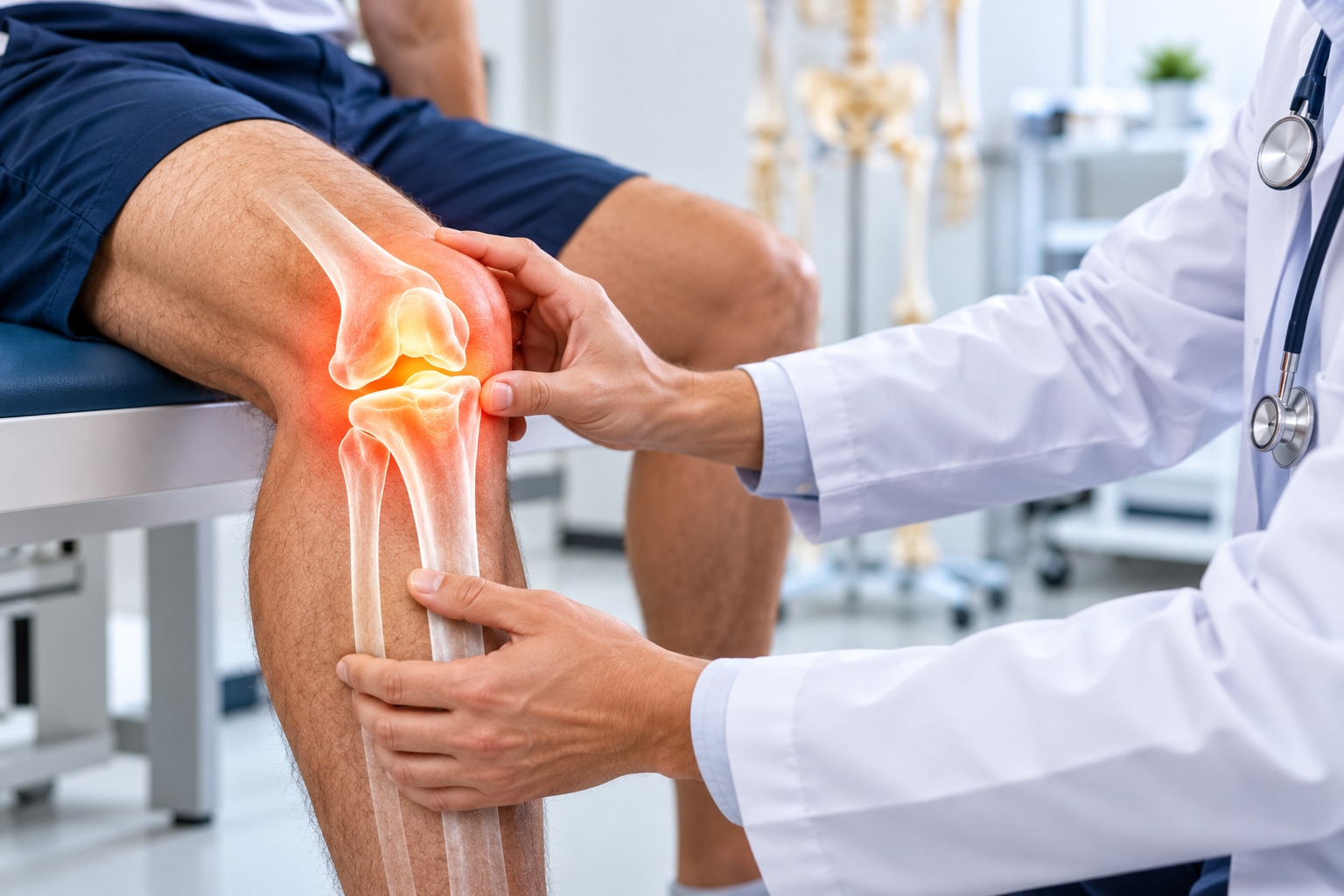
The clinician will compare both sides, look for swelling or deformity, feel the joint, assess strength and stability, and perform a range of motion test. They may also examine your gait, spine or nearby nerves because pain can be referred.
| Test | What it shows | When it makes sense |
|---|---|---|
| X-ray | Bone alignment, narrowing, fracture or arthritis changes | Suspected osteoarthritis, injury or deformity; usually preferred for straightforward arthritis |
| Ultrasound | Tendons, fluid and some soft-tissue inflammation | Suspected tendon disease, bursitis or an accessible joint effusion |
| MRI | Cartilage, ligaments, menisci, marrow and nerves | Symptoms do not fit examination, or another diagnosis is suspected; consider X-ray versus MRI rather than ordering both automatically |
| CT | Detailed bone structure | Complex fracture, surgical planning or a bone problem unclear on X-ray |
| Blood tests | Inflammation, infection or autoimmune clues | Hot swollen joints, prolonged morning stiffness or multiple-joint symptoms; normal results do not exclude early inflammatory arthritis |
| No immediate testing | Clinical assessment guides treatment | Typical activity-related osteoarthritis in adults aged 45 or older with stiffness lasting 30 minutes or less; scans can reveal changes unrelated to pain |
An abnormal image alone does not justify surgery. Persistent pain, loss of function or deformity despite non-surgical care matters more.
How to judge treatment options before surgery
Judge each option by the function it is meant to restore, the evidence for your diagnosis, and a defined review date. Ask what improvement to expect, how long to try it, and what happens if pain or mobility does not improve.
- Exercise: A suitable osteoarthritis exercise plan combines strengthening around the joint with aerobic activity. Temporary soreness is acceptable; escalating pain, swelling, or loss of function means the programme needs adjustment, not abandonment.
- Physiotherapy: Choose supervised treatment when you need technique correction, progression, balance training, or help adapting exercise to another condition. Rest alone often reduces strength and walking tolerance.
- Weight management: If you are overweight, any weight loss can help pain and function; a 10% reduction usually offers more benefit than 5%. It should support exercise, not replace it.
- Medicines: Confirm the dose, duration, stomach, kidney, heart, and blood-pressure risks, and whether a topical medicine is safer. Do not continue ineffective painkillers without review.
- Braces and walking aids: Use a brace only when it addresses a specific instability or load problem. A correctly sized cane or walker can improve safety, but poor height or technique can worsen posture and falls.
- Injections: A corticosteroid injection may provide short-term relief, usually about 2 to 10 weeks, but it does not repair osteoarthritis. Repeated injections should not replace rehabilitation.
- Joint replacement: A joint replacement assessment should follow persistent pain, stiffness, deformity, or disability despite non-surgical care—not age, body-mass index, or an X-ray score alone. Ask about expected function, complications, recovery, and reoperation rates. Be cautious if “keyhole” surgery is offered merely to wash out an arthritic joint.
Frequently asked questions
When does joint pain need urgent orthopaedic assessment?
Seek immediate assessment when pain follows a significant injury, changes the joint’s shape, or prevents safe movement.
Which orthopaedic specialist fits my symptoms?
Your symptom pattern, affected joint, injury history, and mobility problem help determine whether you need a specialist in sports injuries, joint replacement, spine care, hand and upper-limb surgery, or another orthopaedic field.
How should I compare orthopaedic doctors before booking?
Compare their experience with your specific joint problem, examination approach, treatment options, communication, hospital access, and follow-up arrangements.
What happens during the first orthopaedic consultation?
The doctor reviews your symptoms and medical history, examines movement and joint stability, and orders tests such as X-rays, ultrasound, or MRI when the result will guide treatment.
How can I judge treatment options before surgery?
Ask what diagnosis the treatment targets, which non-surgical options remain, how long to try them, what improvement to expect, and why surgery is necessary now.
Related services
PHYSIOTHERAPY PHYSIOTHERAPY What is Physiotherapy? Physiotherapy (or physical therapy) is a healthcare profession that helps people restore, maintain, and improve physical... |
CHEST PHYSICIAN What is a Chest Physician? A Chest Physician specializes in diagnosing and treating diseases related to the lungs, airways, and respiratory system. View service → |
NEUROLOGY NEUROLOGY Neurology is the branch of medicine that deals with the diagnosis and treatment of disorders of the nervous system, which includes the brain, spinal... |
DIABETOLOGY & ENDOCHRINOLOGY What is Endocrinology? Endocrinology is the medical specialty that deals with the endocrine system — the glands that produce hormones. View service → |