Heart trouble does not always begin with severe chest pain: breathlessness, unusual exhaustion, nausea, fainting, or discomfort in the jaw or back can be the first clue. You will learn which symptoms need an ambulance, which need same-day assessment, and how to respond safely while help is coming.
Key takeaways
- Call emergency services for chest pressure with breathlessness, sweating, nausea or fainting.
- Do not drive yourself during suspected heart attack symptoms.
- Seek same-day care for new, recurring or exertional symptoms that settle.
- Arrange follow-up for repeated fatigue, palpitations or breathlessness after symptoms ease.
Which early symptoms can signal a heart problem?
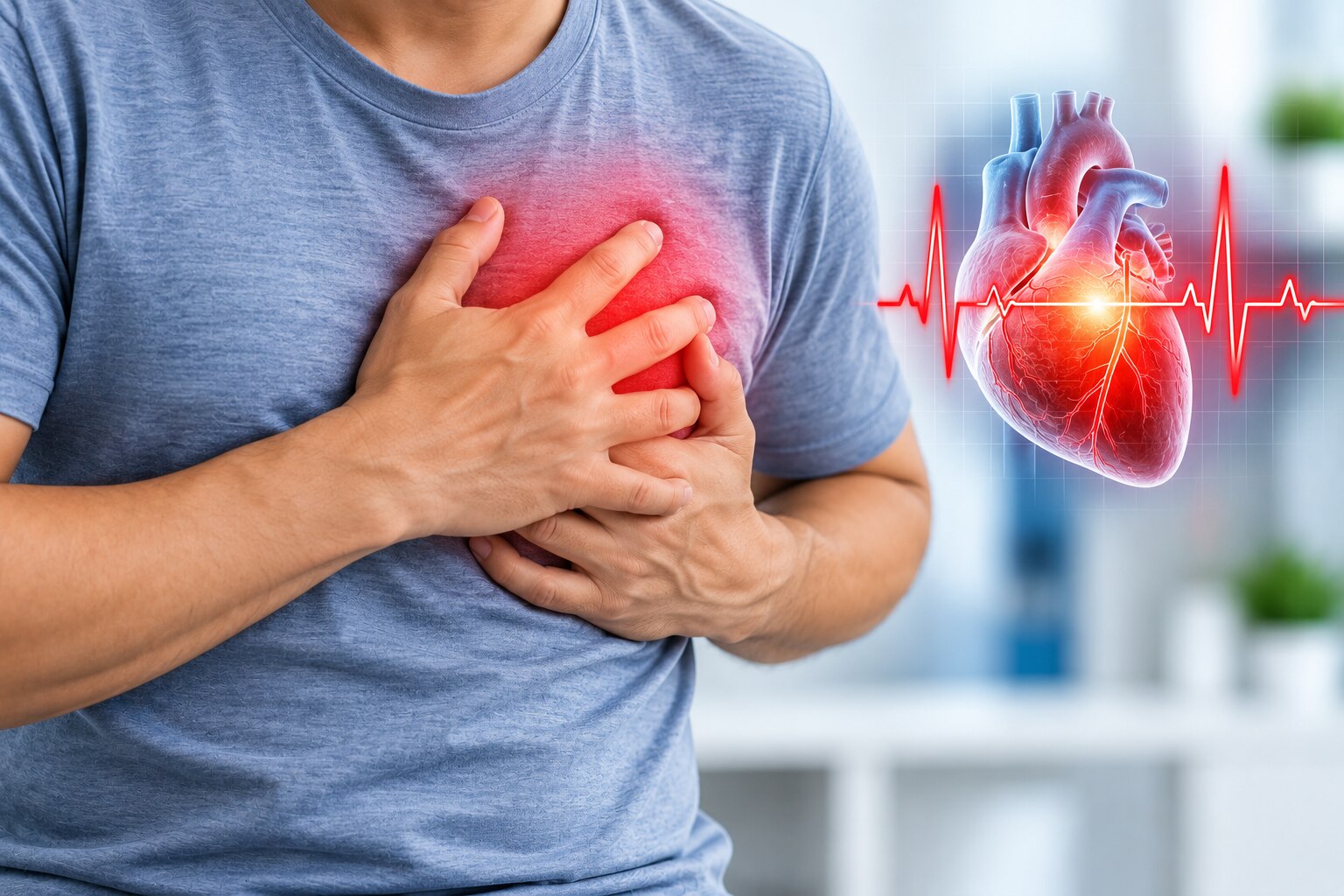
Chest pressure, squeezing, fullness or pain lasting more than a few minutes, returning after it eases, or appearing with breathlessness, cold sweating, nausea, light-headedness or fainting can signal a heart attack. Do not wait for severe pain. Call your local emergency number rather than driving yourself.
| Pattern | What it may signal | Changes to notice |
|---|---|---|
| Heart attack | Blocked blood flow | Pressure or pain spreading to the arm, shoulder, back, jaw or neck; shortness of breath; sweating; nausea; unusual fatigue |
| Heart failure | The heart is not pumping effectively | New breathlessness during activity, when lying flat, or at night; swollen ankles or legs; rapid fluid-related weight gain; persistent cough or wheezing |
| Abnormal rhythm or another cardiac problem | An irregular or strained heartbeat | Racing, pounding or skipped beats with dizziness, weakness, chest discomfort or fainting |
The connection between shortness of breath and heart problems matters even without chest pain. Unusual tiredness, indigestion-like discomfort, vomiting, back or jaw pain, or sudden weakness can also be heart attack symptoms, including in women.
A blood-pressure reading of 180/120 mm Hg or higher with chest pain, breathlessness, weakness, vision changes or difficulty speaking requires immediate medical care.
How can heart symptoms differ by person or resemble something else?
A heart attack does not follow a reliable pattern by sex or age. Heart attack symptoms in women may include nausea, vomiting, unusual fatigue, indigestion-like discomfort, shortness of breath, or pain in the back or jaw, with little chest pressure.
Heart attack symptoms in men can also occur outside the chest, so these differences never make symptoms less urgent.
| Group | Why symptoms may be less obvious | What you might notice |
|---|---|---|
| Women | Heart ischemia can produce stronger non-chest symptoms | Breathlessness, nausea, back or jaw pain, unusual exhaustion |
| Older adults | Pain perception, activity levels, and other illnesses can mask a new problem | Confusion, weakness, breathlessness, faintness, or sudden loss of function |
| People with diabetes | Nerve damage can blunt pain signals; the link between diabetes and silent heart attack is well recognised | Sweating, nausea, weakness, breathlessness, or unexplained fatigue |
| People with kidney disease | Nerve damage and chronic breathlessness can obscure a change | Sudden worsening breathlessness, weakness, nausea, or reduced stamina |
Heart symptoms in older adults can look like a fall, confusion, or inability to complete a familiar task. Kidney disease can also make baseline tiredness or breathlessness seem normal.
Self-diagnosis is unsafe because reflux, muscle strain, panic, lung disease, and low blood sugar can resemble heart trouble, while ischemia can damage the heart without dramatic pain. Clinicians use an electrocardiogram, blood tests such as troponin, and examination to separate these causes.
If symptoms are sudden, severe, or unexplained, do not wait for certainty before seeking emergency care.
When do heart symptoms require an ambulance, same-day care, or a routine appointment?
Call an ambulance for chest pain when it is sudden, lasts more than a few minutes, returns after easing, or comes with breathlessness, fainting, cold sweat, nausea, or pain in the arm, jaw, back, or shoulder. Do not drive yourself or wait for it to pass.
| Response | Choose it when | What to do |
|---|---|---|
| Ambulance | Severe chest pressure, collapse, marked breathlessness, stroke signs, or blood pressure of 180/120 mm Hg or higher with chest pain, weakness, vision change, or difficulty speaking | Call your local emergency number immediately |
| Same-day cardiac assessment | New breathlessness, breathlessness when lying flat, waking gasping, or stable angina symptoms: discomfort that reliably follows exertion or stress and eases with rest | Stop exertion and arrange assessment today; a new, worsening, or rest-onset pattern needs emergency care |
| Routine appointment | Mild, brief symptoms that fully settle, have no warning features, and are not triggered by exertion | Book an appointment; recurring episodes still need evaluation rather than self-diagnosis |
| Urgent blood-pressure advice | A reading of 180/120 mm Hg or higher without the emergency symptoms above | Rest five minutes, repeat it correctly, and seek urgent medical advice; the reading alone cannot confirm or exclude a heart attack |
For a same-day cardiac assessment, choose ALTIUZ HOSPITAL or another facility that can perform an ECG and blood tests such as troponin without delaying emergency transfer. Sudden facial droop, one-sided weakness, speech trouble, loss of balance, or vision loss requires an ambulance even if it disappears.
Related service
CARDIAC/HEART HEALTH Cardiac (Heart) Health refers to the overall well-being and proper functioning of the heart and blood vessels — a vital part of your cardiovascular... View service → |
What should you do while waiting for emergency help?
Call emergency services for chest pain, sudden severe breathlessness, collapse, or pressure that lasts more than a few minutes or returns after easing. Do not drive yourself or wait for it to disappear. Tell the dispatcher your symptoms, location, medications, and whether you have an allergy to aspirin.
What to do during a heart attack while help is coming:
- Sit upright or rest in the position that makes breathing easiest. Stop walking, loosen tight clothing, and keep your phone on speaker.
- Unlock the door, ask someone to stay with you, and gather your medication list. Do not eat or drink.
- If you become unresponsive and stop breathing normally, someone should begin CPR and use an automated external defibrillator if available.
| Medicine | Use while waiting | Avoid |
|---|---|---|
| Aspirin for suspected heart attack | Chew aspirin only if the emergency dispatcher or clinician advises it, and only if you are not allergic, bleeding, or under instructions to avoid it. | Do not take it for unexplained symptoms or possible stroke signs without advice. |
| Prescribed nitroglycerin | Use your own nitroglycerin exactly as prescribed after contacting emergency services. Sit before taking it. | Do not use someone else’s supply, take extra doses, or combine it with sildenafil, tadalafil, vardenafil, or riociguat. |
| Painkillers or antacids | Wait for professional guidance; they can delay assessment. | Do not use them to mask symptoms or replace emergency care. |
A blood-pressure reading of 180/120 mm Hg or higher with chest pain, breathlessness, weakness, vision change, or difficulty speaking also requires immediate care.
Which warning patterns deserve follow-up even after symptoms settle?
A symptom that settles still deserves follow-up when it recurs, progresses, or appears with exertion. Heart symptoms that come and go can reflect a developing problem rather than a harmless episode.
| Pattern | Clues | Appropriate response |
|---|---|---|
| Reduced exercise tolerance | New breathlessness or unusual exhaustion during an activity that was previously easy; breathlessness when lying flat or waking gasping | Arrange cardiovascular evaluation, especially if the change is worsening |
| Fluid or congestion | Ankle, foot or leg swelling, rapid weight gain, persistent cough or wheezing, increasing fatigue | Seek prompt medical assessment; these are heart failure warning signs |
| Palpitations and fainting | Repeated racing or irregular beats, fainting during exercise or while lying down, or fainting with a family history of sudden cardiac death | Obtain prompt cardiovascular evaluation; exertional fainting needs urgent attention |
| Possible stroke | Sudden facial droop, one-sided weakness or numbness, speech difficulty, loss of balance or vision trouble | Call emergency services immediately, even if the signs disappear |
A chest pressure episode that lasts more than a few minutes, returns after easing, or occurs with breathlessness, sweating, nausea, light-headedness or pain spreading to the arm, jaw, back or shoulder requires emergency care. Do not wait for a routine appointment.
Keep a record of timing, triggers, duration, pulse changes, swelling and weight changes. That information helps a clinician decide whether you need an electrocardiogram, blood tests, heart imaging or rhythm monitoring.
Frequently asked questions
Which early symptoms can signal a heart problem?
Chest pressure, squeezing, fullness or pain can signal a heart problem, especially with breathlessness, cold sweating, nausea, light-headedness or fainting. Unusual fatigue, palpitations and breathlessness during activity also deserve assessment.
How can heart symptoms differ by person or resemble something else?
Symptoms can vary in location and intensity. Heart problems may cause discomfort in the arm, back, neck, jaw or upper abdomen, and can resemble indigestion, anxiety, muscle strain or respiratory illness. Do not rely on pain severity alone.
When do heart symptoms require an ambulance, same-day care, or a routine appointment?
Call an ambulance for chest pressure or pain lasting more than a few minutes, returning after easing, or occurring with breathlessness, sweating, nausea, fainting or severe weakness. Seek same-day care for new or recurring symptoms that settle. Book a routine appointment for repeated exertional symptoms or persistent changes without emergency features.
What should you do while waiting for emergency help?
Stop activity, sit or lie in a safe position, unlock the door and follow the emergency dispatcher's instructions. Do not drive yourself. Take prescribed heart medicine only as directed, and ask about aspirin before taking it unless emergency professionals have instructed you.
Which warning patterns deserve follow-up even after symptoms settle?
Arrange medical follow-up for symptoms that recur, appear during exertion, wake you at night, or accompany palpitations, unusual fatigue or breathlessness. Temporary relief does not rule out a heart problem.